
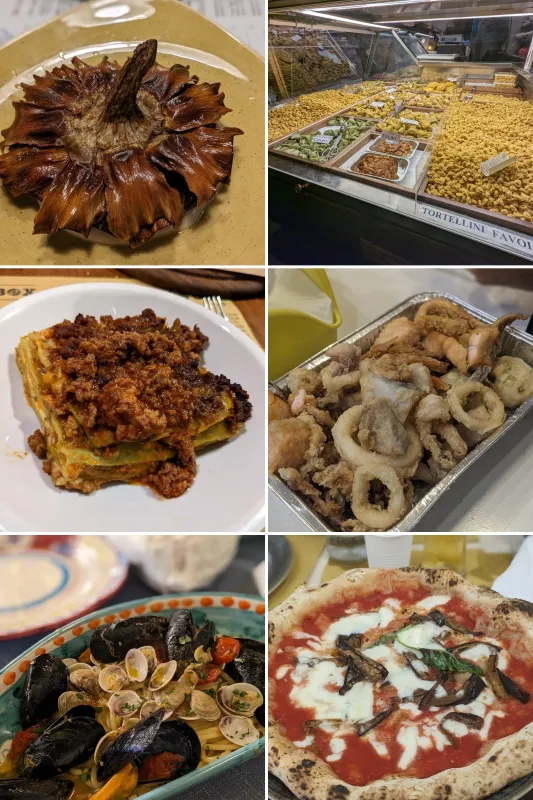
3 Places in Italy Anthony Bourdain Never Went — But Would Have Loved
I never met Anthony Bourdain. But I’ve thought about him a lot while eating in Italy.
Not in a parasocial way. More like: you’re sitting at a plastic table in a port-side shack in Puglia, grilled octopus in front of you, cold drink sweating on the table, and you think: he would have gotten this.
Bourdain understood something most travel content still gets wrong: the point isn’t the Michelin star. The point is the meal that makes you feel like you stumbled into something real. Something that wasn’t designed for you, wasn’t waiting for you, and couldn’t care less what you think of it.
I’ve lived in Italy since 2022 and have traveled to all 20 regions. I’ve eaten in places with no English menu, no TripAdvisor listing, no Instagram presence. A handful of those meals have stuck with me the way good meals do. Not because they were perfect, but because they were honest.
This post is about three of those places. None of them are famous. Bourdain never went to any of them. And every one of them is exactly the kind of place he would have loved.
Quick Answer
The best food in Italy isn’t always in the most famous cities. It’s in places that still cook like they have something to prove, or nothing to prove at all. Below are three restaurants across Bari, Palermo, and Rome. All personally visited, no sponsors. Followed by the method I use to find places like them across all 20 regions.
What Made Bourdain’s Approach Different
Most food content about Italy misses the fundamental thing: Italy isn’t one cuisine. It’s 20 regions, each with its own dialect, its own ingredients, its own idea of what belongs on a plate.
Bourdain’s whole approach was built on that. He wasn’t interested in ‘Italian food.’ He was interested in what people in Palermo ate for lunch on a Tuesday. What the fishermen in Puglia threw on a grill before noon. What got handed down and what got forgotten.
That specificity is everywhere in Italy if you know how to look. The problem is most travelers don’t look. They follow the algorithm, book the place with 12,000 reviews, and eat fine. Not bad. Just fine.
The places Bourdain would have loved don’t work that way. They’re grounding. Local. Occasionally confrontational. Always worth it.
1. Frisc & Mang — Bari, Puglia (Maps link)
Bari’s old city, the Citta Vecchia, runs on fish. Every morning the catch comes in, every afternoon it goes on a plate, and by evening the place is either packed or already closed. There’s no performance to it.
Frisc & Mang is that. The name is Barese dialect, roughly ‘fry and eat.’ That’s the whole concept. Grill, fryer, or paper cone. Whatever came off the boat that morning.
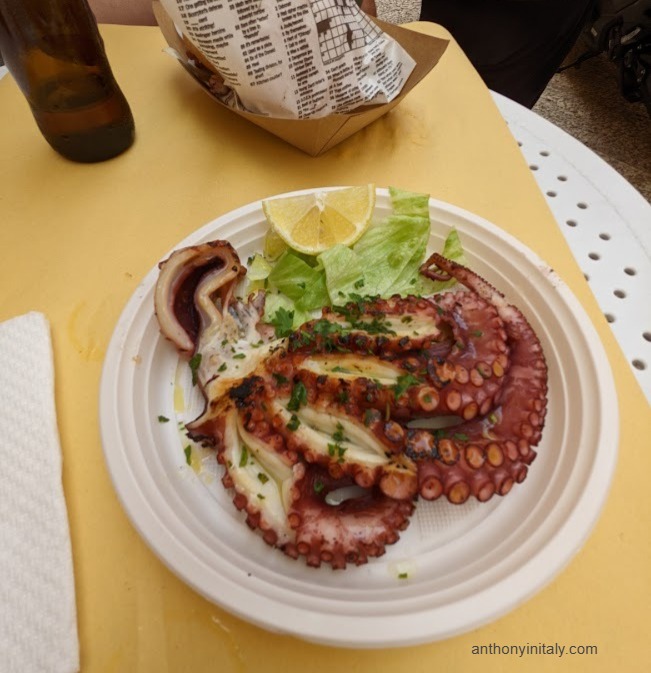
I ordered grilled octopus. It arrived on a plastic plate with lemon wedges and some lettuce that was clearly an afterthought. No sauce, no drizzle, no story about the chef’s grandmother. Just octopus, heat, and a cold drink.
It was exactly what it was supposed to be.
This is the kind of place where you eat standing up, or at a white plastic table, and the person next to you is a retired dockworker eating the same thing. No English spoken. No menu in the usual sense. Bourdain would have had two plates and tried to talk to everyone there.
What to order: Grilled octopus. Whatever the fried special is that day. A cold local beer.
Good to know: Get there before 2pm. When the fish is gone, that’s it. There’s no second option.
2. Altri Tempi — Palermo, Sicily (Maps link)
Palermo is one of those cities that either clicks for you immediately or takes a day to settle. It’s loud, layered, occasionally chaotic, and completely itself. It does not care what you expected.
Altri Tempi, ‘other times’ or ‘the old days,’ is a trattoria tipica in the truest sense. When I sat down, the menu was already on the table. The owner came over and said: ‘English or Italian?’
I said Italian. He took the menu away and came back with a different one. ‘That one was in Palermo dialect,’ he said. ‘Here’s Italian.’
That exchange tells you everything about what kind of place this is.
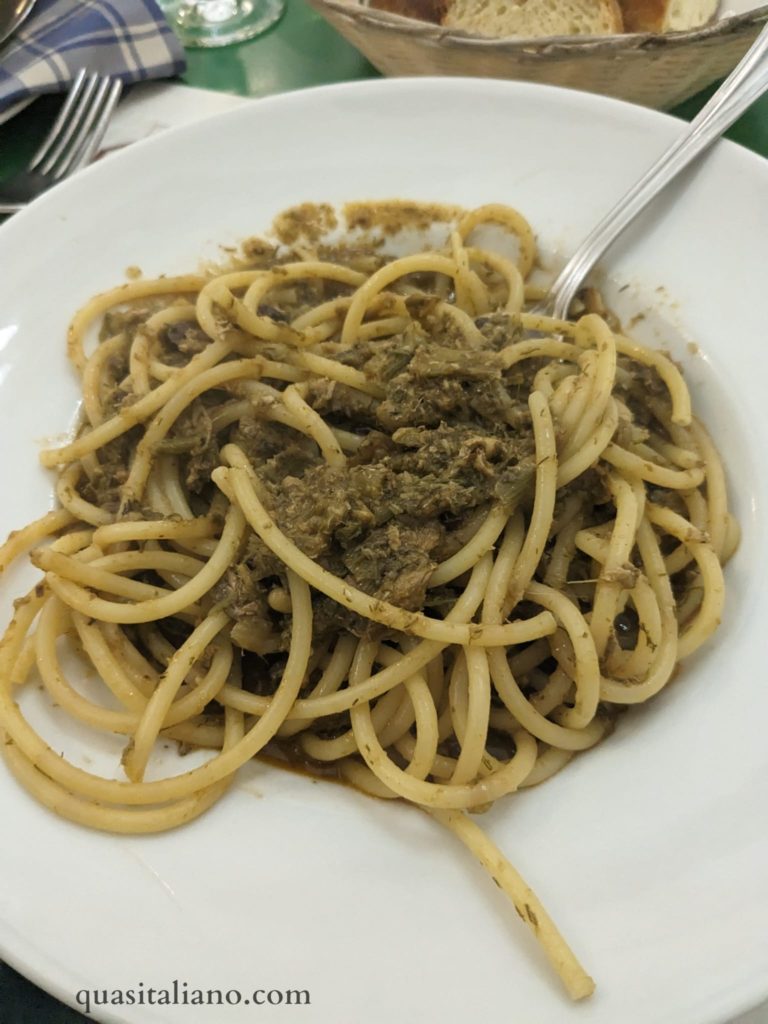
The food is Sicilian in the way Sicilian food used to be. Bold, briny, built on ingredients that don’t exist in the same form anywhere else. Things with capers, pine nuts, and raisins that make no sense until they suddenly make complete sense. The pasta speaks Sicilian too. So does the attitude.
No concessions to tourism. No background music. No filter. Bourdain would have ordered one of everything, asked pointed questions about where the fish came from, and stayed for another carafe of house wine.
What to order: Ask the owner what’s tipical. Don’t negotiate. Whatever he recommends will be correct.
Good to know: Fills up fast with locals at lunch. Get there early or book ahead by phone.

3. Massimo’s Al 39 — Rome, Lazio (Maps link)
Rome is a minefield for food. The tourist trail runs straight through the worst of it: overpriced cacio e pepe, carbonara with overcooked egg, bruschetta made three hours ago sitting under plastic wrap. Getting a good Roman meal in Rome takes deliberate effort.
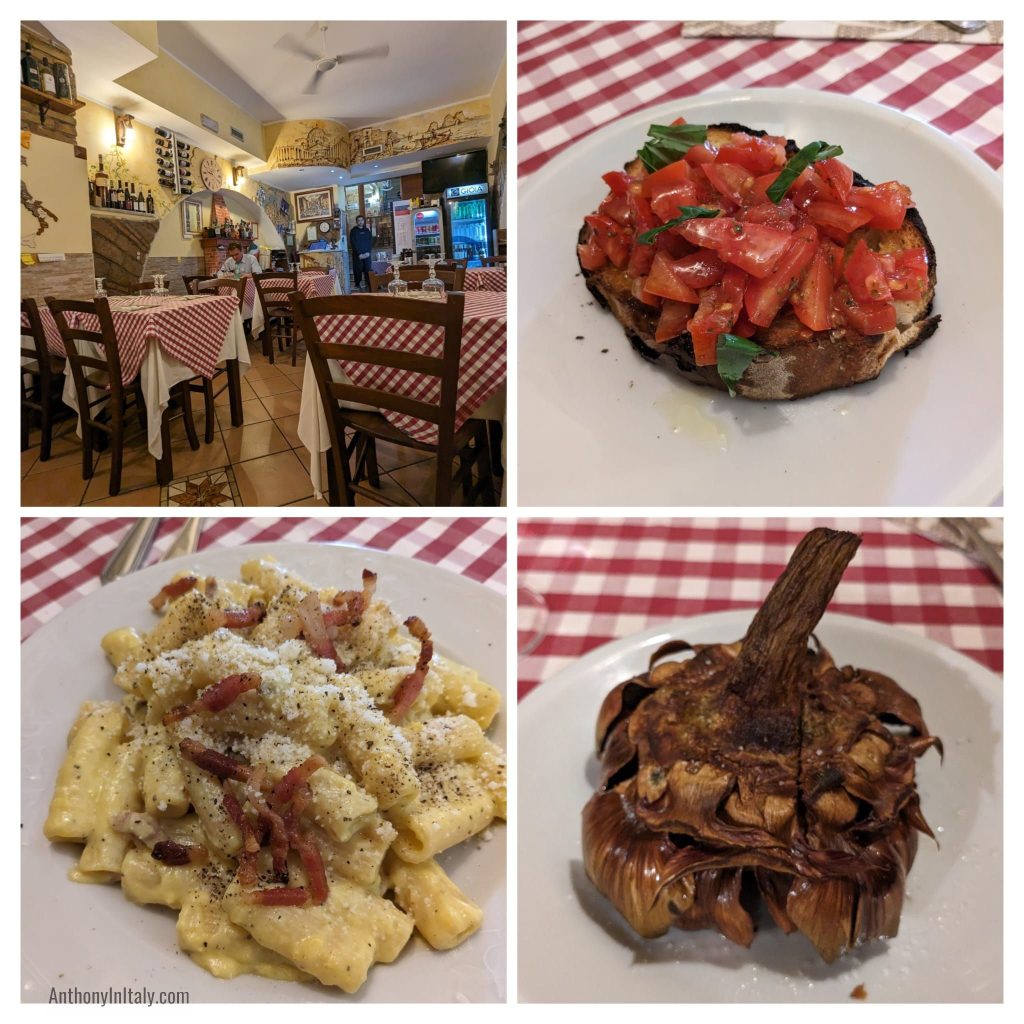
Massimo’s Al 39 does the classics without drama. The room looks like what every Italian-American restaurant in New Jersey is trying to replicate: red-and-white checked tablecloths, bottles on the shelf, a guy in the back who clearly owns the place and has for a long time, and a female server who seems like she doesn’t have time for you. She probably doesn’t. That’s fine.
The carbonara is proper. No cream, no shortcuts, the kind of egg-to-pasta ratio that makes you stop mid-sentence. The cacio e pepe is peppery enough to mean it. The artichoke arrives charred and looking slightly aggressive on the plate. The amatriciana never disappoints.
No frills. No fuss. The kind of place you want to come back to before you’ve even finished eating.
What makes it feel right is the complete absence of effort to impress you. They’re not trying to be a destination. They’re a neighborhood restaurant doing their job well, and in Rome, where the baseline for pasta is already high, that means something.
Bourdain would have eaten here alone, ordered a carafe of house red, and written something good about it.
What to order: Carbonara. Cacio e pepe. Amatriciana. The artichoke if it’s on that day.
Good to know: It’s not far from the central station, but don’t let that fool you. The quality is there. Mostly indoor seating only. At lunch you don’t need a reservation if you get there right when they open.
How to Find Places Like These
This is the part most food content skips. Finding a good restaurant in Italy is a skill. Here’s the method I use, a preview of what’s in the full guide.
1. Ask a local, but be specific
Skip the hotel front desk. If I want a real recommendation, I go to a bar or cafe, order a coffee, and ask whoever’s behind the counter: “Where can I find somewhere to eat something simple and typical from here? Not fancy or trendy, just the most local food.”
In Italian, show them this on your phone:
“Dove posso trovare un posto dove mangiare qualcosa di semplice e tipico di questa zona? Niente di elegante o di moda, solo un posto con il cibo piu tipico di questa citta.”
This phrasing works. People understand immediately what you’re after, and most of the time, they’re eager to show off the food from their hometown. Italy has 20 regions, and within each, different provinces with their own specialties. Ask where you are, not just what’s good.
2. Use Reddit the right way
Not the general Italy travel subreddits. Go to the Italian-language subreddit for the specific city or town you’re in. Locals recommend spots they personally eat at, and they don’t care whether the food photographs well. You’ll find things that don’t exist in any English-language guide. Translate if you need to. It’s worth it.
3. Read Google Maps like a detective
Skip places with 20,000 five-star reviews. Those are usually the ones with the longest lines and the least soul, places that learned how to be popular rather than good. I look for spots with 300 to 500 reviews and a rating in the 4.2 to 4.5 range. That’s the sweet spot: solid local places that haven’t blown up on social media yet.
Scroll through the photos too. I want to see plates that look humble and basic. Nothing curated, nothing foamy. Food that looks like someone’s grandmother made it. She probably did.
4. Follow your nose
Sometimes I just take a risk. Walk down a street that looks lived-in, see a few old men having lunch at noon, and go in. The best places rarely have English menus and often don’t have websites. That’s the charm. That’s Italy.
Want 27 More Restaurants?
I put together a guide of 30 restaurants across all 20 Italian regions. Every single one personally visited, no sponsors, no secondhand tips. Spots from Rome and Florence to small towns most people never make it to.
It’s part restaurant list, part food journal, part method guide. Built so you can eat Italy the way Bourdain would have. Formatted for your phone so you can use it while you’re on the move.
Eating Italy: The Bourdain Way — $17 Get it here
Key Takeaways
The best meals in Italy are rarely in the most obvious places. Regional cooking in Bari, Palermo, and even central Rome rewards the traveler who looks slightly harder than average.
How you find a restaurant matters as much as which restaurant you find. Locals, Reddit, and knowing how to read Google Maps will take you further than any top-ten list.
Authenticity in Italian food usually looks like an absence of effort to impress you. When a place doesn’t care if you’re wowed, it usually means they don’t need to try.
Final Thoughts
Bourdain said the best meals are the ones where nobody’s trying to make you feel special. Where the food is the whole point, and everything else is just furniture.
That’s Italy at its best. The plastic plate in Bari. The owner who swaps your menu because you said you speak Italian. The carbonara that doesn’t need an explanation.
These places exist all over this country. Most of them are still waiting for someone to show up and order without overthinking it.
What I’ve Learned Living Here
After four years eating my way through Italy, I’ve stopped chasing the meal that’s going to be the best meal. I look for the one that feels like it belongs to the place I’m in, the one that couldn’t exist anywhere else. That’s almost always the one I remember.
Written by Anthony Calvanese — an American living in Italy since 2022 who has traveled across all 20 Italian regions. Planning your own trip? Grab my Italy Trip Reality Checklist to avoid the most common travel mistakes.
FAQ
Do I need to speak Italian to find good food in Italy?
No, but a few phrases go a long way. Asking ‘Dove mangiate voi di solito?’ in a local bar will get you further than any app. People appreciate the effort, and the recommendations get noticeably better.
Are these restaurants still open?
All three were open as of my visits. I’d recommend checking Google Maps before making a special trip, especially for smaller spots. Hours and seasonal closures can change without notice.
Is it really that hard to find good food in Rome?
In the tourist center, yes. You have to be deliberate. Get a few streets off the main drag and the quality jumps fast. Massimo’s Al 39 is a good example of what’s available when you look just slightly harder than the average visitor. See also Where to Eat in Rome: Places I Keep Going Back To
Related Content
- The 7 Most Common Scams in Italy (and How to Avoid Them Like a Local)
- Is Italy Safe for Tourists? Crime, Pickpockets, and Scams Explained
- How Many Cities Should You Visit in 14 Days in Italy?
- Do You Need to Speak Italian to Travel in Italy?
- Rome, Florence, Venice… and Amalfi? Why This Italy Itinerary Usually Fails
- A Real 10-Day Italy Itinerary (Rome, Florence, Venice—No Fluff, All Flow)
- How many days in Rome? (or any other Italian destination)
- Rome — Everything You Need to Know