
What You Need to Know About Public Bathrooms in Italy
If you’ve spent any time reading about Italy before your trip, you’ve probably come across some version of bathroom panic. People on forums asking where to find them, warning others to carry coins and tissues, and generally making it sound like Italy is a bathroom wasteland.
It’s not that dramatic. But there are a few things worth knowing before you go.
I’ve lived in Italy since 2022 and have traveled across all 20 regions. Here’s the honest breakdown.
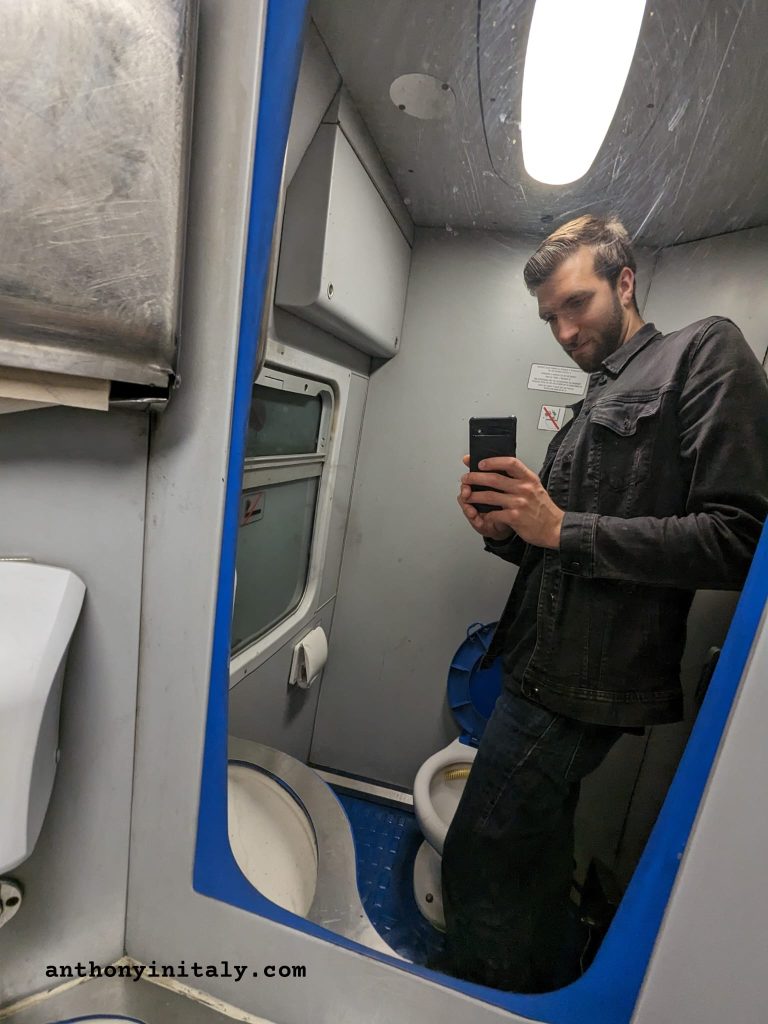
Quick answer: Public bathrooms in Italy exist, they’re usable, and you’ll survive. You’ll occasionally pay for them, occasionally find no toilet seat, and occasionally wish you had a tissue in your pocket. Plan for those three things and you’ll be fine.
Do You Have to Pay?
Sometimes. Here’s when you will and won’t.
You won’t pay at:
- Restaurants and bars where you’re eating or drinking
- Museums and paid attractions (if you’re already inside with a ticket)
- Most cafes if you buy something
You will (or might) pay at:
- Train stations — typically around €1, sometimes up to €1.20 at larger stations like Milan Centrale. Most big stations now accept card or contactless payment, but keep a €1 coin on you anyway
- Outside the entrance of major tourist attractions — if you haven’t paid admission and need to go before you get in, there’s usually a paid option nearby
- Standalone public bathrooms in city centers — rare but they exist, usually €0.50 to €1
The honest answer is that if you’re moving through Italy the normal way — eating at restaurants, grabbing coffee, visiting museums — you won’t pay for bathrooms very often. The coin situation matters most if you’re rushing through a train station or standing outside a big attraction.
What I Do When I’m in a City and Need to Go
I walk into a bar and order something.
Bar in Italy means coffee shop, not a drinking establishment. They’re on virtually every block. I order an espresso or a bottle of water — both cost around €1 — and use the bathroom. In busy cities, most bars will only let customers use the bathroom anyway, so this is the move regardless.
It’s the same cost as a standalone paid bathroom, and you get a coffee out of it.
If you’re near a train station, that’s another option — just factor in the €1 fee.
Bathrooms on Italian Trains
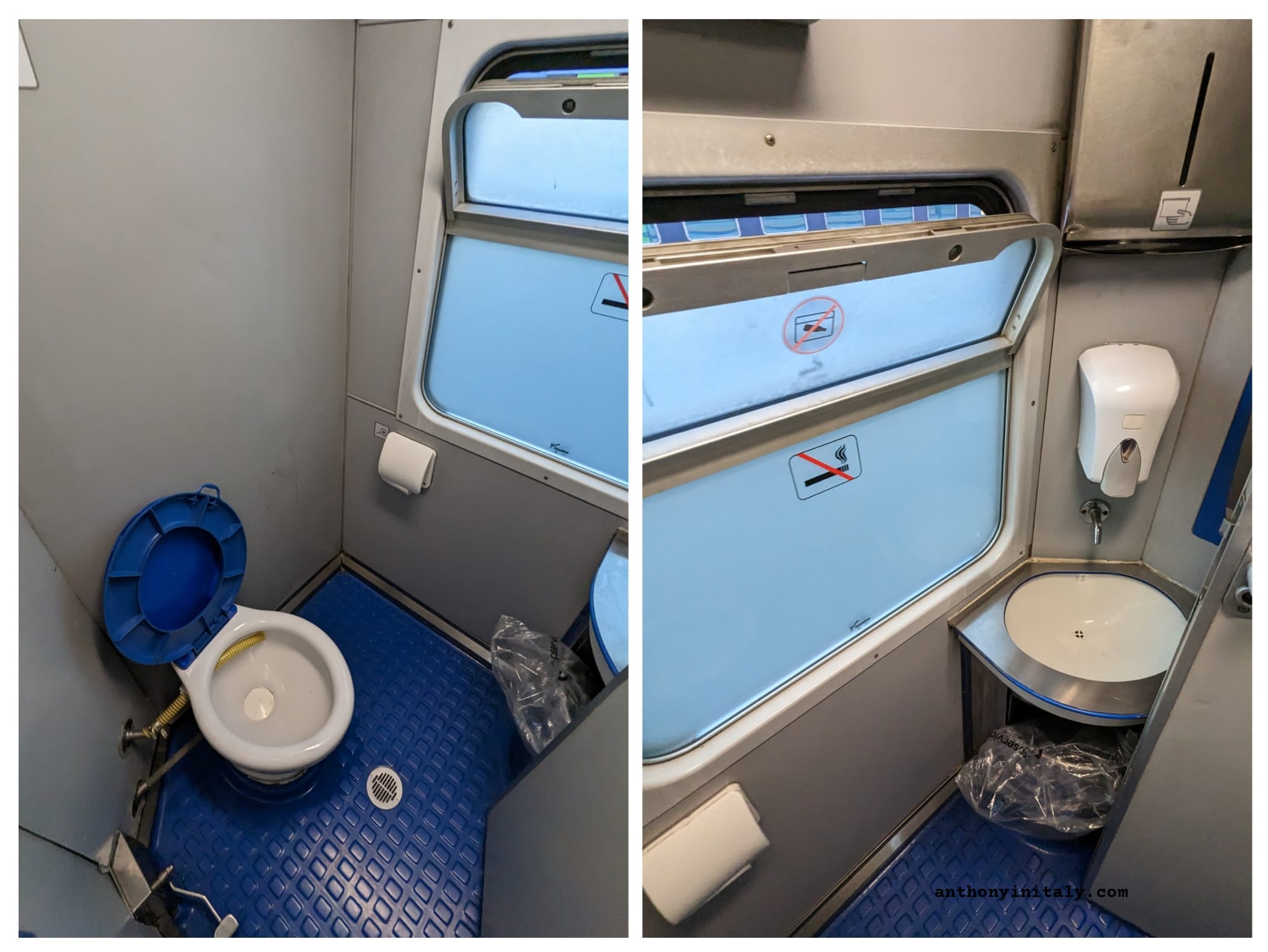
All trains in Italy have bathrooms. That’s the short answer. Here’s the longer one.
Regional trains (the slower, cheaper trains that connect smaller cities and towns) — these vary. Older regional trains have bathrooms that are functional but well-used. Cleanliness depends on when they were last cleaned, which happens on a schedule. You’ll have a place to go in an emergency. You might not love it. Newer regional trains have better facilities.
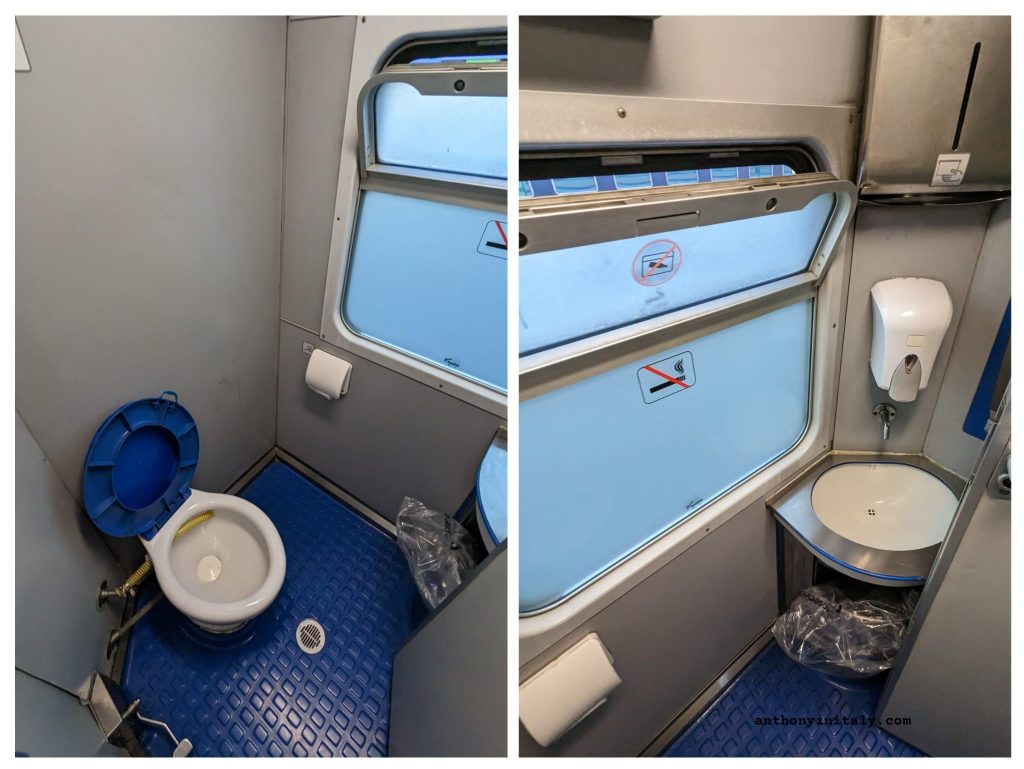
High-speed trains — the Frecciarossa, Frecciargento, Frecciabianca, and Italo — tend to have cleaner bathrooms. You’re also usually on these trains for a shorter amount of time, so the odds of a problem are lower.
The Toilet Seat Situation
This one catches people off guard. It’s common to walk into a public bathroom in Italy and find a toilet with no seat.
The explanation is simple: the seat broke, and nobody replaced it. Why bother replacing it if it’s just going to break again? That’s the logic, anyway.
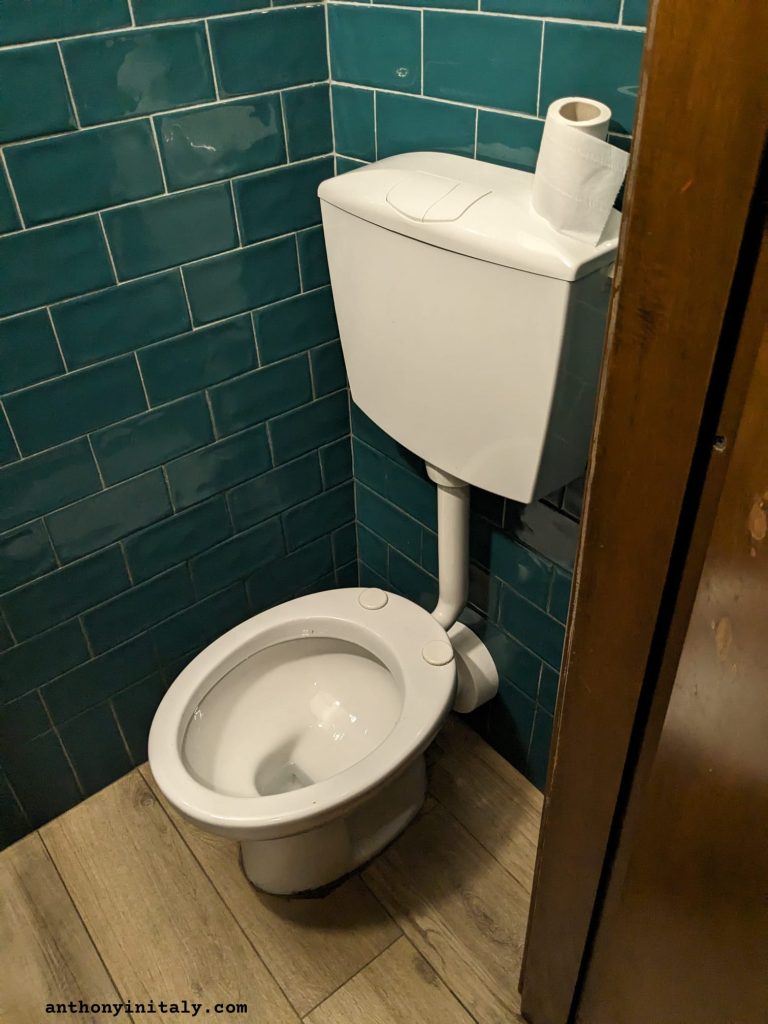
The cultural context is that Italians are generally raised not to make contact with public toilet seats. Hovering is the norm. So the absence of a seat isn’t the crisis it might feel like to someone from North America — it’s just how things are in a lot of public spaces.
If you need to sit, you’ll need to hover. Good core workout.
Carry Tissues
This applies especially to women. Toilet paper is not always stocked, particularly in smaller bars, older train bathrooms, and some public facilities. A small travel pack of tissues takes up no space and has saved me more than once.
Soap is usually there. Hand sanitizer as a backup never hurts.
Key Takeaways
- Keep a €1 coin on you for train station bathrooms
- If you need to go in a city, walk into a bar and order an espresso — same cost as a paid bathroom, better experience
- All trains have bathrooms; high-speed trains are cleaner than older regional ones
- Toilet seats are missing more often than you’d expect — hover or bring a seat cover
- Carry a small pack of tissues, especially if you’re a woman
Final Thoughts
The bathroom situation in Italy is not as bad as the internet makes it sound. It just requires a little more awareness than you might be used to at home. Know where you can go, have a coin and some tissues on you, and stop worrying about it.
Italy has bigger things to offer your attention.
FAQ
Do all trains in Italy have bathrooms? Yes. All trains in Italy have at least one bathroom. Cleanliness varies — older regional trains are the most inconsistent, high-speed trains like the Frecciarossa tend to be better maintained.
How much does it cost to use a bathroom at an Italian train station? Typically €1. At larger stations like Milan Centrale it can be up to €1.20. Most big stations accept contactless payment, but a €1 coin is good to have as backup.
What’s the easiest way to find a free bathroom in an Italian city? Walk into a bar (coffee shop), order an espresso or water for about €1, and use the bathroom. It’s the most reliable option and you get something out of it.
Written by Anthony Calvanese — an American living in Italy since 2022 who has traveled across all 20 Italian regions. Planning your own trip? Grab my Italy Trip Reality Checklist to avoid the most common travel mistakes.
Related Content
- The 7 Most Common Scams in Italy (and How to Avoid Them Like a Local)
- Is Italy Safe for Tourists? Crime, Pickpockets, and Scams Explained
- How Many Cities Should You Visit in 14 Days in Italy?
- Do You Need to Speak Italian to Travel in Italy?
- Rome, Florence, Venice… and Amalfi? Why This Italy Itinerary Usually Fails
- A Real 10-Day Italy Itinerary (Rome, Florence, Venice—No Fluff, All Flow)
- How many days in Rome? (or any other Italian destination)