How to Get to Perugia, Umbria: A Guide from Someone Who Actually Lives Here
I’ve been living in Perugia for nearly five years, and I don’t drive. So I’ve figured out pretty much every public transport option for getting here: what works, what rarely lines up, and what to watch out for when you’re dragging luggage through a station you’ve never been in before.
Below, you’ll find every realistic way to get here from Rome, Florence, and Perugia’s own airport, plus how to get from the train or bus station up into the historic center. Here’s the honest breakdown.
Quick Answer
Most people coming from Rome take the train from Termini or the FlixBus from Tiburtina. Check the Sulga schedule first in case its direct bus from Fiumicino lines up with your flight.
How you get up to the center depends on how you arrive:
- By train: Get off at Perugia (Fontivegge), then take the Minimetrò to the end of the line.
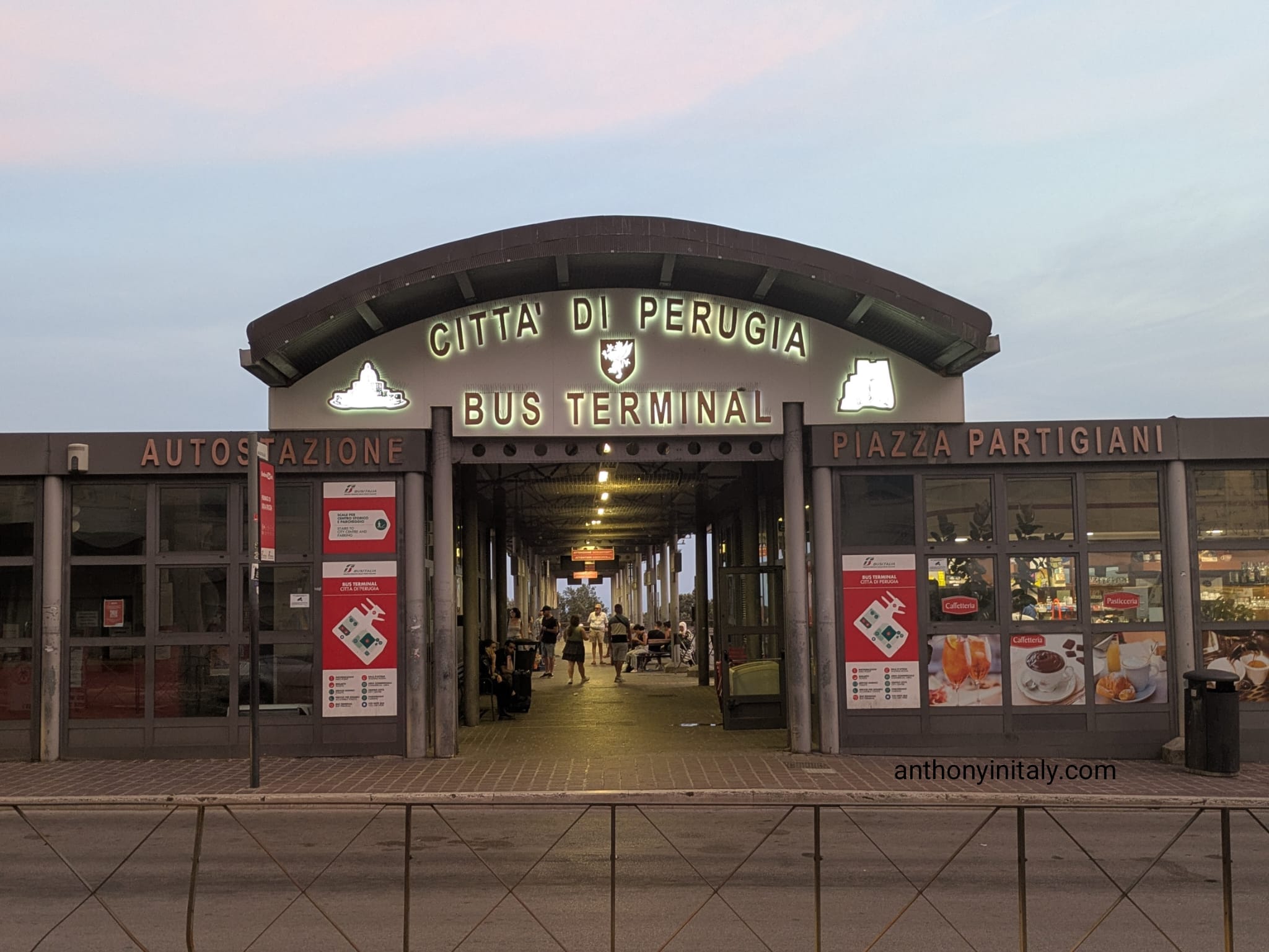
- By bus (FlixBus, Sulga, or the Airlink from Perugia airport): You’ll arrive at Piazza Partigiani. Take the escalators up to Piazza Italia.
- Arriving late? The Minimetrò stops around 9pm. The escalators from Piazza Partigiani run until almost 2am. If you’re landing late, the bus gives you a much longer window.
What to Expect
Getting to Perugia isn’t hard, but it isn’t a one-train trip either. From Rome, plan on 3 to 4 hours door to door, usually with a connection somewhere.
The thing that trips people up isn’t the long leg. It’s the last mile. Perugia’s historic center sits on top of a hill, and there are two different arrival points at the bottom: the train station and the bus station. They connect to the center in different ways. Get that part right and everything else is easy.
One more thing: you don’t need a car in Perugia. This guide focuses on public transport because that’s how most people get here, and it’s how I get around myself.
Flying Into Rome Fiumicino (FCO)
Most people flying into central Italy land at Rome Fiumicino. From there, you’ve got three ways to get to Perugia.
Option 1: The Direct Sulga Bus
Sulga runs a direct bus from Fiumicino airport to Perugia. A direct bus from the airport sounds almost too good to be true, and it kind of is: there are only a handful of departures a day, so the odds of it lining up with your flight aren’t great. But if it does, it’s worth it. The ride is about 3 hours and 45 minutes, and it drops you at Piazza Partigiani (see below for getting into the center).
Check the current Sulga schedule before you book anything else. It might save you a connection.
Option 2: Train via Rome Termini
This is the most common route. Take the train from Fiumicino into Roma Termini, then catch a regional train from Termini to Perugia. Total travel time is roughly 3 to 3.5 hours depending on the connection.
Two things to know about Termini:
- Look for a direct train to Perugia. They exist, and they’re worth finding.
- The platform for Perugia (and Foligno) trains is a long walk inside the station. Give yourself an extra 10 minutes. It’s far, especially with bags. I’m not exaggerating here.
Option 3: FlixBus from Roma Tiburtina
FlixBus runs from Roma Tiburtina bus station to Perugia. It’s a solid option if the price is right, and it drops you at Piazza Partigiani.
Flying Into Perugia Airport (PEG)
Perugia has its own small airport, San Francesco d’Assisi, about 20 minutes outside the city. There aren’t many routes, but if one works for you, it’s the easiest way to arrive by far.
The cheapest way into town is the Umbria Airlink bus. A ticket costs €5, and the schedule is built around flight times. It drops you at Piazza Partigiani, the bus station (see below for getting into the center).
Buy your ticket before you board. The easiest way is the SALGO app (Buy tickets > Fixed rate tickets > Umbria Airlink). You can technically buy on the bus, but so does everyone else on your flight, and the line at the driver holds up the whole departure. Activate your ticket before you’re on.
One catch: the €5 fare includes one bag up to carry-on size (55x40x20 cm). A full-size suitcase or a second bag is another €5.
You can also grab a taxi outside arrivals. It’s faster to your door, but you’ll pay a lot more for the same short ride.
Coming From Florence
Take the regional train from Firenze Santa Maria Novella to Perugia. It takes about 2.5 hours.
Worth knowing: there’s one high-speed Frecciarossa a day that passes through Perugia, connecting to places like Florence and Padua. It usually runs very early in the morning, so it probably won’t fit most trips. But it exists.
Get Off at the Right Station
There are multiple train stations with Perugia in the name. You want Perugia, also known as Fontivegge. That’s the main one.
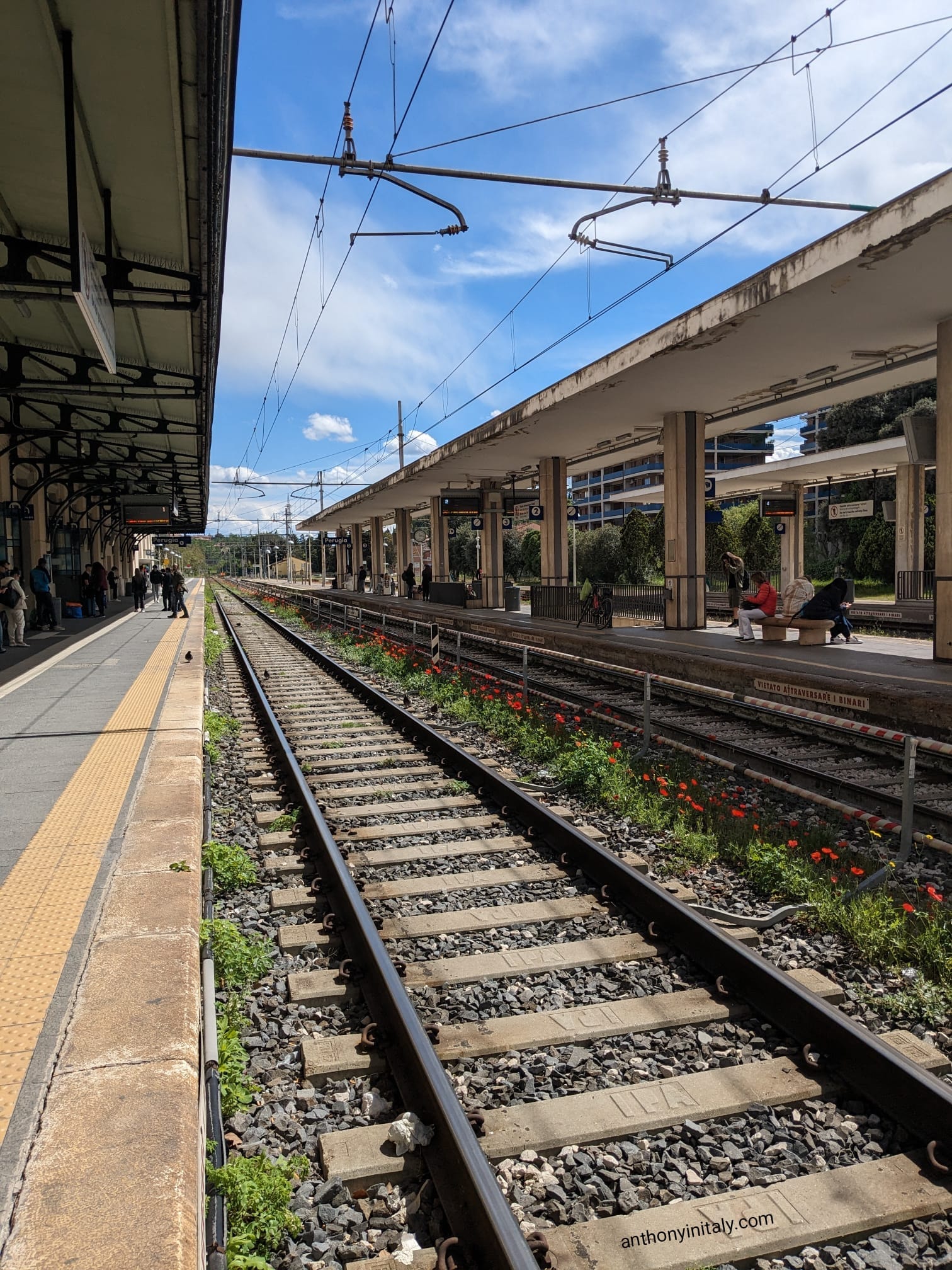
People who live here love to describe the area around Fontivegge as sketchy. By Italian standards, sure, it’s not the prettiest part of town. By American standards, it’s fine. There are some homeless people and the occasional rough character hanging around. They generally don’t bother anyone. I’d just avoid lingering there alone late at night, especially if you’re traveling solo.
Getting From the Train Station Into the Center
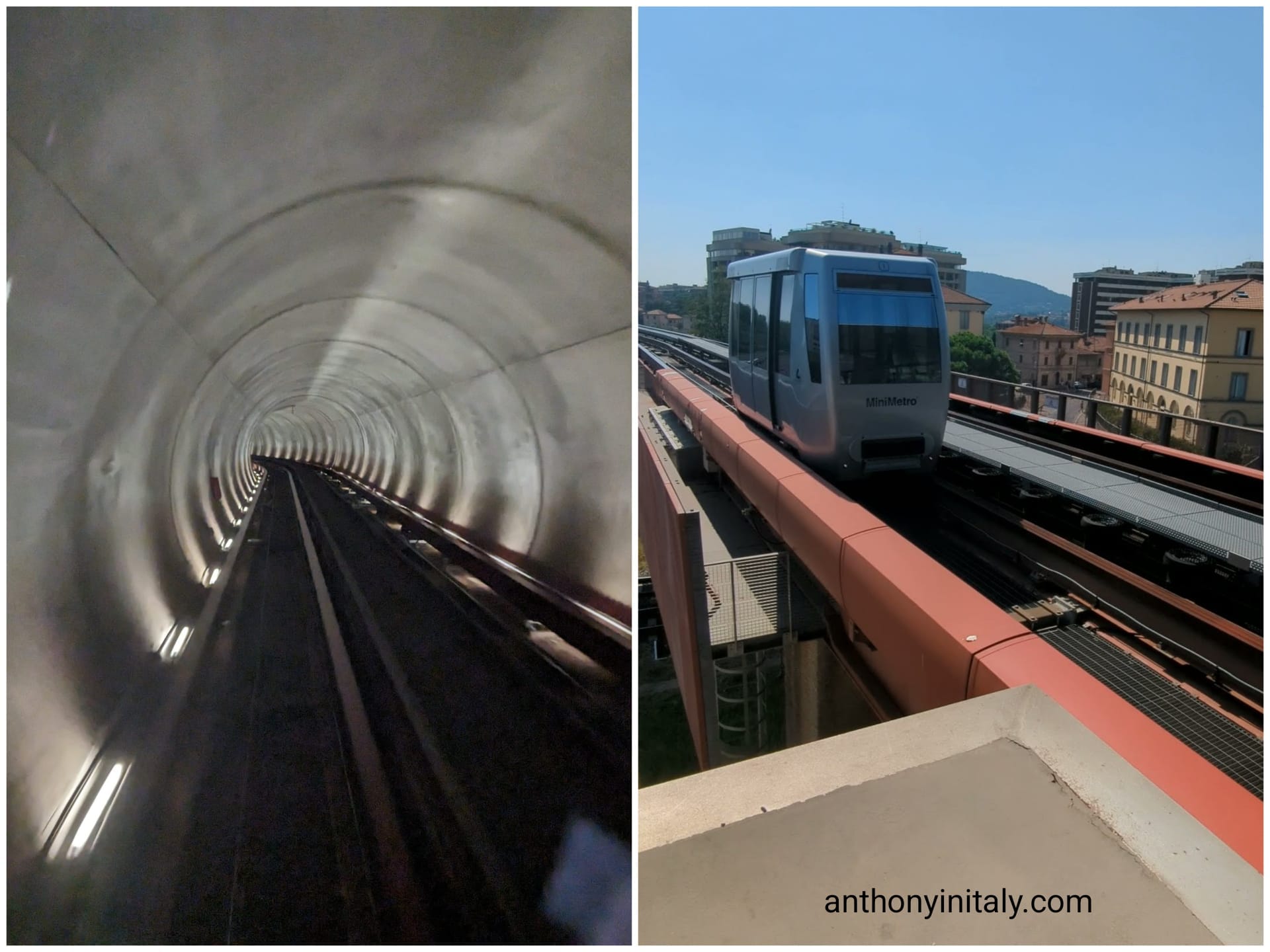
Once you’re at Fontivegge, take the Minimetrò, a small automated rail line that runs from just outside the train station up into the city center. It looks a little like a roller coaster. Ride it all the way to the end of the line. It’s the easiest way to get up the hill with your bags.
Tickets:
- Single ride: €1.50
- 10-ride pass: about €12
The same tickets work on the local city buses (lines A, B, C, D, F, G, but not the E line or E1001). So a 10-ride pass covers both the Minimetrò and the buses while you’re in town.
Minimetrò hours:
- Monday to Saturday: 7:00 to 21:05 (last run)
- Sundays and holidays: 9:00 to 20:45 (last run)
On some Saturdays it runs later, until 1:05. Check the Minimetrò website for current hours.
If your train gets in after the last run, there will be taxis outside the station. Agree on a rate before you get in. Don’t plan on walking up with luggage. It’s steep, and it’s further than it looks.
Getting From the Bus Station Into the Center
Every bus in this post, whether it’s Sulga, FlixBus, or the Airlink from Perugia airport, drops you at Piazza Partigiani. No Minimetrò here. Take the escalators up to Piazza Italia instead. They’re free, they run through the remains of the Rocca Paolina fortress, and they come out at the start of Corso Vannucci, the main street.
The escalators run from about 6:15 to 1:45, so unless you’re arriving in the middle of the night, you’re covered. Hours can change, so if you’re cutting it close, check with your host.
What About Driving?
You can drive to Perugia, but I wouldn’t build your trip around a car here. Parking is one of the biggest complaints among people who live in Perugia, and once you’re in town, you don’t need a car at all. Spello, Assisi, and Lake Trasimeno are all reachable by train, and plenty of other towns by bus. For most trips, a car is more hassle than it’s worth.
If you do drive, don’t go into the historic center. It’s a ZTL (limited traffic zone), and cameras fine you automatically. Park outside it and go up by Minimetrò or escalator:
- Pian di Massiano: free, at the start of the Minimetrò line
- Piazza Partigiani: paid, escalators up to Piazza Italia
- Pellini: paid, escalators up to Via dei Priori
Rates and availability change, so check before you go. Or better yet, ask your host.
What About a Private Transfer?
You can book a private car from Rome or Florence, but it’s a long, expensive ride for something the train does well. I don’t recommend it.
Key Takeaways
- Know your arrival point. Train means Fontivegge and the Minimetrò. Bus means Piazza Partigiani and the escalators.
- Watch the clock. The Minimetrò stops around 9pm. If you’re landing late, the bus gives you a longer window.
- Skip the car. You don’t need one in Perugia, and parking is a headache even for locals.
Final Thoughts
Getting to Perugia takes a little more planning than hopping between Rome and Florence, but it’s not complicated once you know the last mile. Pick the train or the bus based on your timing, know where you’ll land, and you’ll be up in the center without dragging your bags up a hill.
Personal Insight
I’ve done every one of these routes without a car, and the long leg from Rome is never the hard part. The stress always comes at the end: the walk across Termini to the Perugia platform, the line of people buying tickets from the Airlink driver, or realizing the Minimetrò has stopped for the night. Those are small things, but they’re the difference between arriving relaxed and arriving annoyed. Plan for them and the trip is easy.
Still planning the rest of your trip? Grab my free Italy Trip Reality Checklist. It’s what I wish I’d had before my first trip here: the stuff that actually goes wrong, so you can plan around it.