
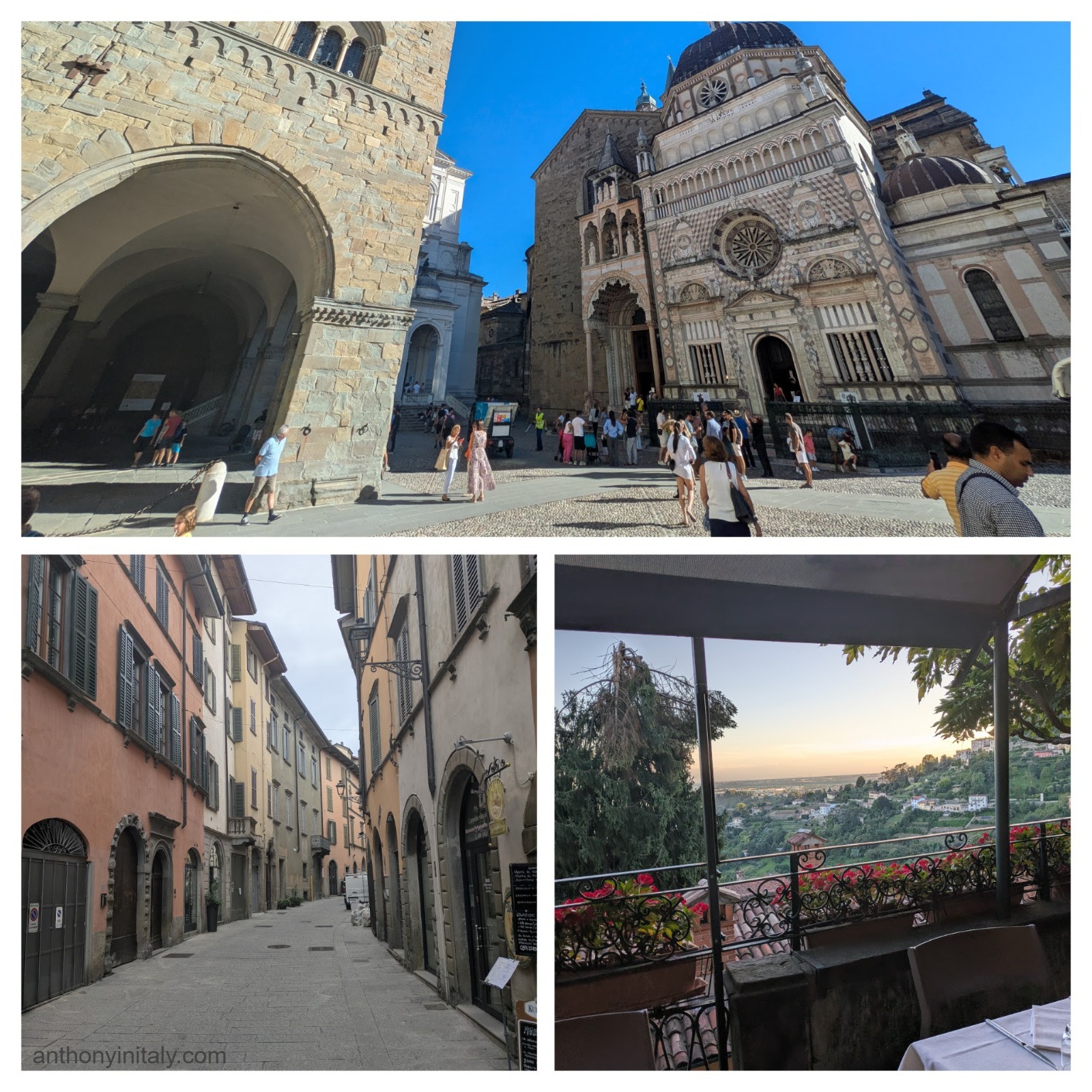
Bergamo, Italy: A Traveler’s Guide (From Someone Who Actually Went)
I went to Bergamo because a friend of mine from the US and his girlfriend were making their way through Switzerland and Northern Italy. They hadn’t been to Italy before, and Bergamo was the spot that made sense to meet up. I’d never been either. It turned out to be one of those trips where the city ends up being way better than expected. Good food, a genuinely beautiful upper town, and none of the tourist crush you get in Milan or Venice.
This isn’t a “top 10 things to do” list pulled from other blogs. This is what I actually ate, where I actually stayed research on, and what I’d tell a friend before they book.
Quick Answer
Bergamo is absolutely worth a stop, especially if you’re flying into Milan Bergamo airport anyway (yes, it’s actually in Bergamo, not Milan). Give it a full day minimum, two if you want to eat properly and not rush the upper town. Base yourself in or near Città Alta, the walled upper city, and skip trying to see it as a rushed layover.
Reality Check
Most people only know Bergamo as “that airport Ryanair flies into.” That’s a mistake. The upper town, Città Alta, is a walled medieval hill city connected to the lower town by funicular, and it’s genuinely one of the better-preserved old towns in Lombardy. It’s not undiscovered, you’ll see other tourists, but it’s nowhere near the density of Milan or Venice. You can walk into a restaurant on a weeknight without a reservation and still get a table.
The city is flat in the lower part and up top in Città Alta, with some incline getting between the two if you don’t take the funicular. It’s clean and very walkable. You don’t need a car and you don’t need to overplan it.
How Many Days Do You Need in Bergamo?
Two to three nights is the sweet spot. That gives you a full day to properly work through Città Alta without rushing, another day to slow down on things like Via Pignolo and the cemetery, and enough time to actually enjoy a couple of real sit-down meals instead of grabbing something fast between sights.
Could you do it in a day trip from Milan? Sure, and a lot of people do. But you’d be trading away the part that makes Bergamo worth it, having dinner up in Città Alta after the day-trippers clear out, when the upper town gets quiet and you’re not fighting crowds around Piazza Vecchia. If you’ve got two to three nights, you get the full picture: the food, the walk up via funicular, the slower corners like Via Pignolo, and a proper dinner at a place like La Colombina without feeling rushed through it
What to Do in Bergamo
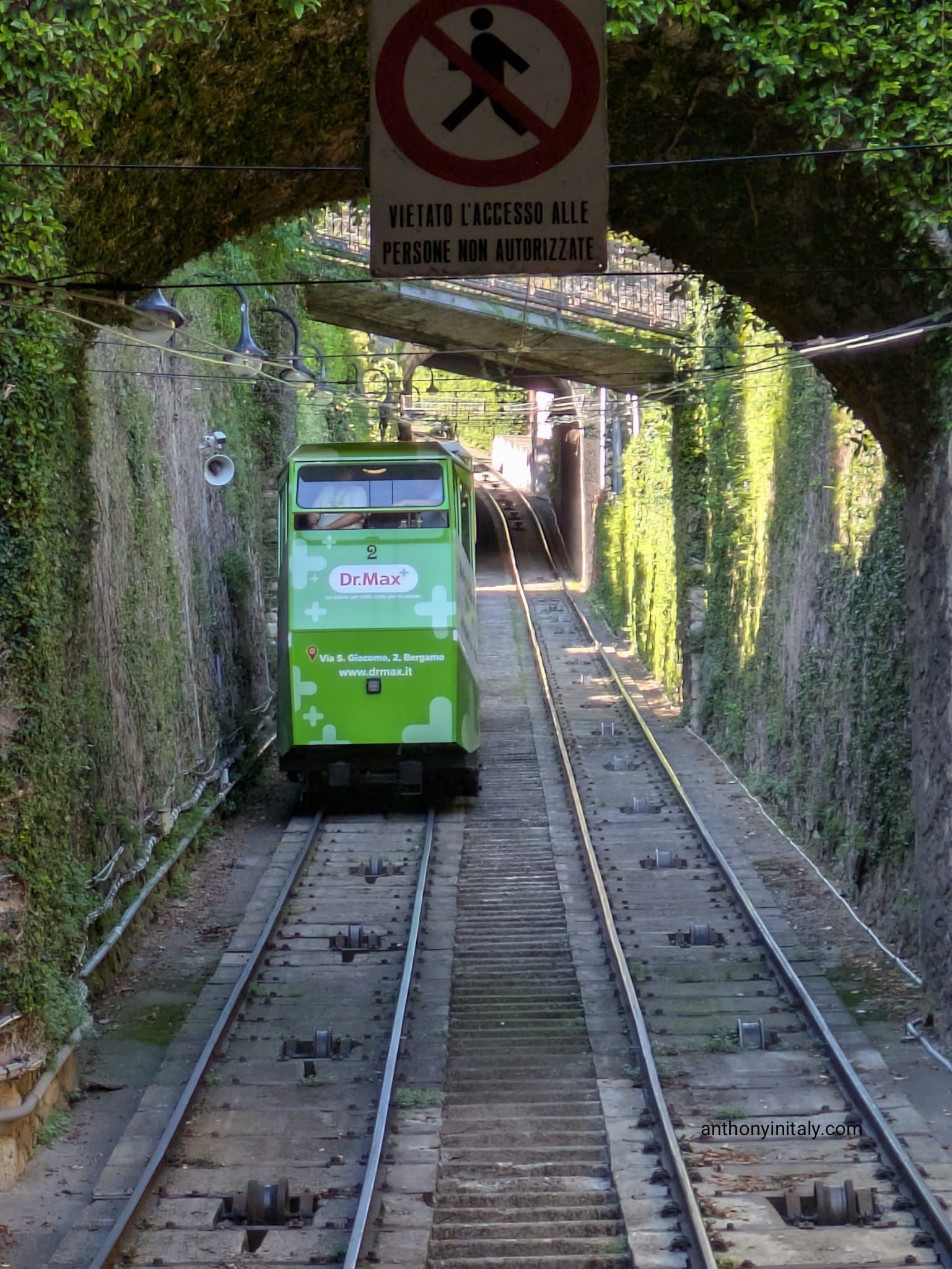
Città Alta via funicular. The easiest and honestly the most fun way up to the old town is the funicular that connects the lower city to Città Alta. It’s been running since the late 1800s and takes just a few minutes to climb the hill. There’s a second funicular that continues from Città Alta up to San Vigilio, higher still, for panoramic views over the city and the plains below. If you’ve got the time, ride both. It’s a small thing but it sets the tone for the whole visit, you’re not slogging uphill, you’re just enjoying the ride up into a completely different part of the city.
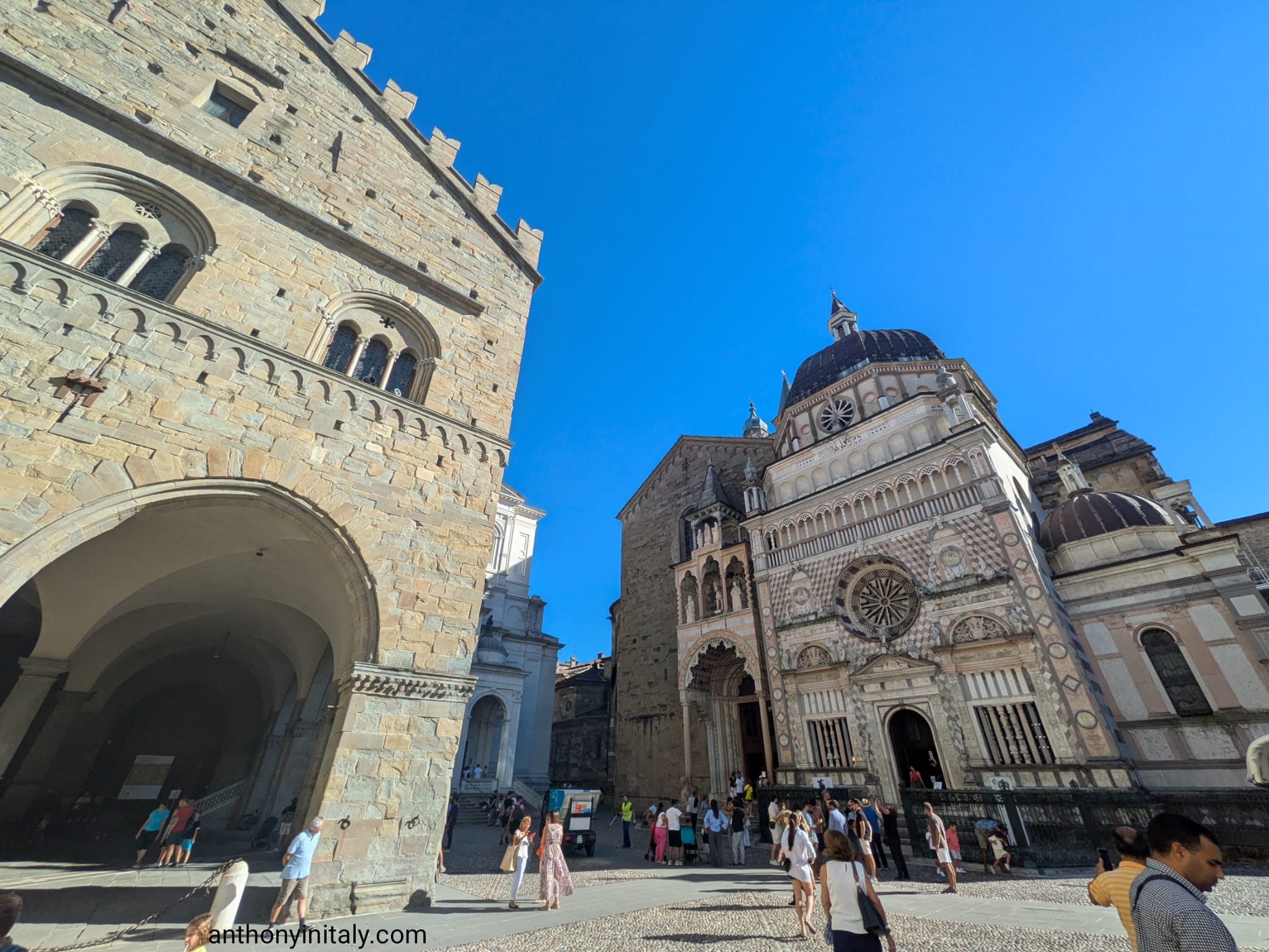
Piazza Vecchia. This is the heart of Città Alta and it’s worth slowing down in. The Palazzo della Ragione dates back to the late 1100s and is considered the oldest municipal government building in Lombardy, with an 18th-century sundial still on the pavement in front of it. Next to it is the Campanone, the civic tower, which still rings 100 times every night at 10pm, a tradition tied to the old city curfew. The piazza also has the Contarini Fountain from 1780. Right next door is Piazza Duomo, home to the cathedral and the Cappella Colleoni, one of the more striking Renaissance chapels you’ll find in a city this size.
Walk the city walls. Once you’re up in Città Alta, don’t just stick to the piazzas, walk the Venetian walls themselves. It’s one of the better ways to see the city from above without doing anything touristy about it. Head toward the Belvedere del Orologio Solare near Parco di San Giovanni for one of the better viewpoints along the way. Here’s the spot on Google Maps so you know exactly where you’re headed.
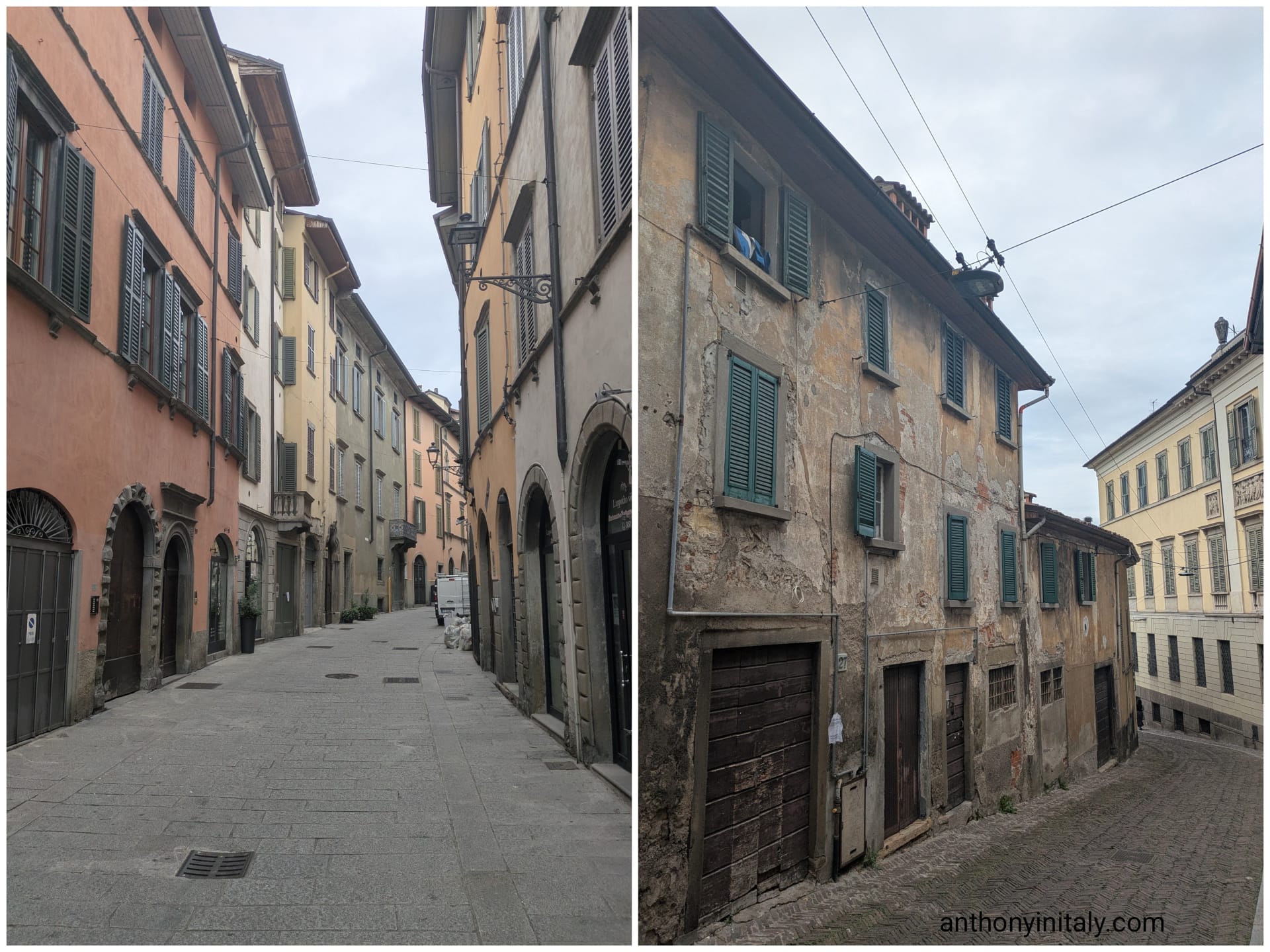
Via Pignolo and the Palazzo Agliardi area. This is one of the streets I’d actually point people toward instead of just sticking to the main piazza. It’s a steep, historic street lined with old palazzi, and it doesn’t get anywhere near the foot traffic of Piazza Vecchia. Good for a slower walk if you want a break from the more obvious tourist stops.
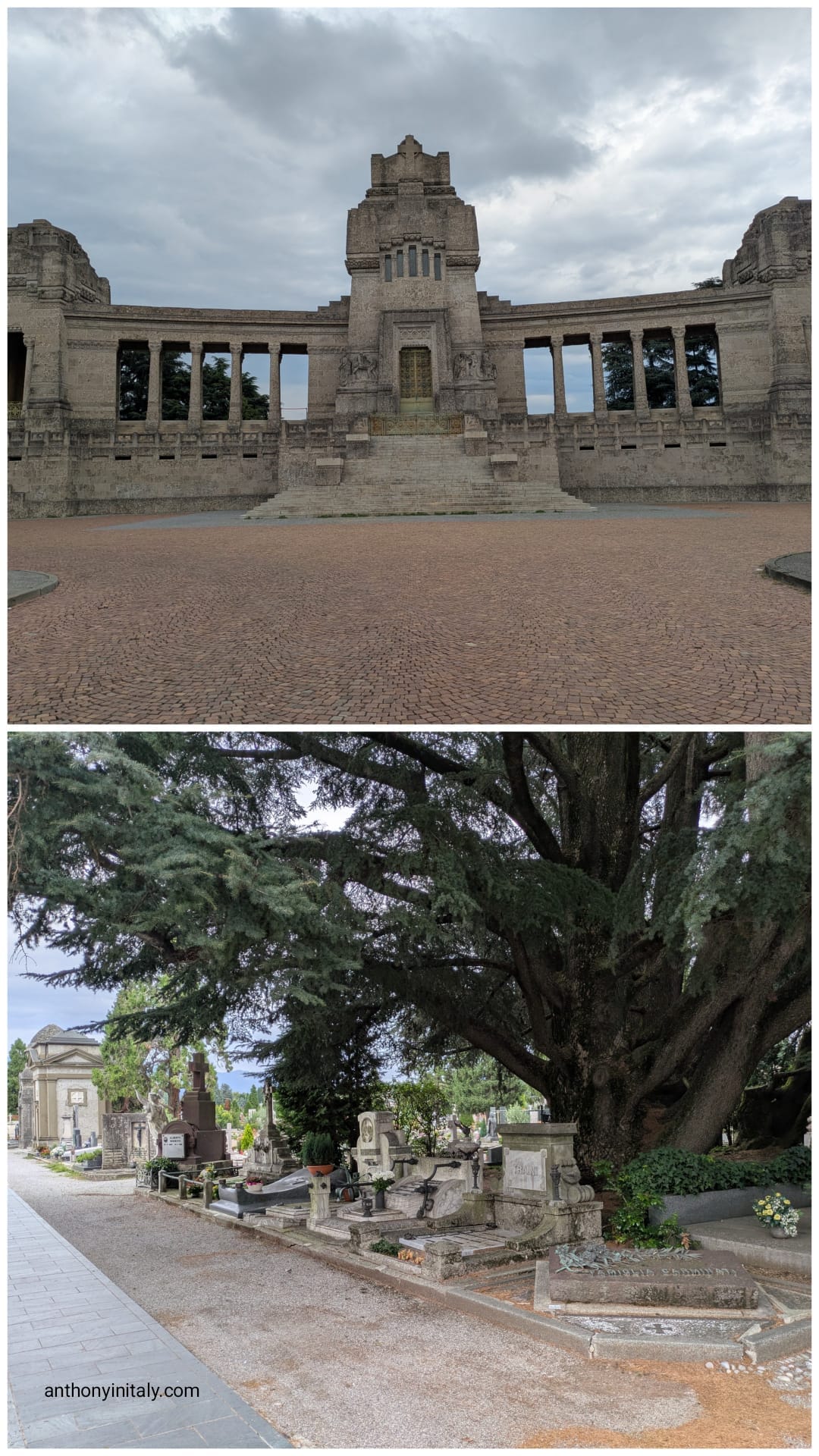
Cimitero Monumentale di Bergamo. I wasn’t expecting to recommend a cemetery, but this one is worth the detour if you’re into architecture or local history. It was built in the early 1900s after Napoleon’s 1810 edicts forced Bergamo to consolidate its old burial grounds outside the city walls. Architect Ernesto Pirovano won the design competition in the 1890s, and construction ran from 1904 to 1912. It’s a semicircular stone structure with a central staircase leading up to a truncated-pyramid memorial chamber called the famedio. The composer Gianandrea Gavazzeni is buried there. It’s in Borgo Palazzo, a moderate walk from the lower town, and it’s quiet in a way that’s genuinely worth experiencing rather than just checking off.
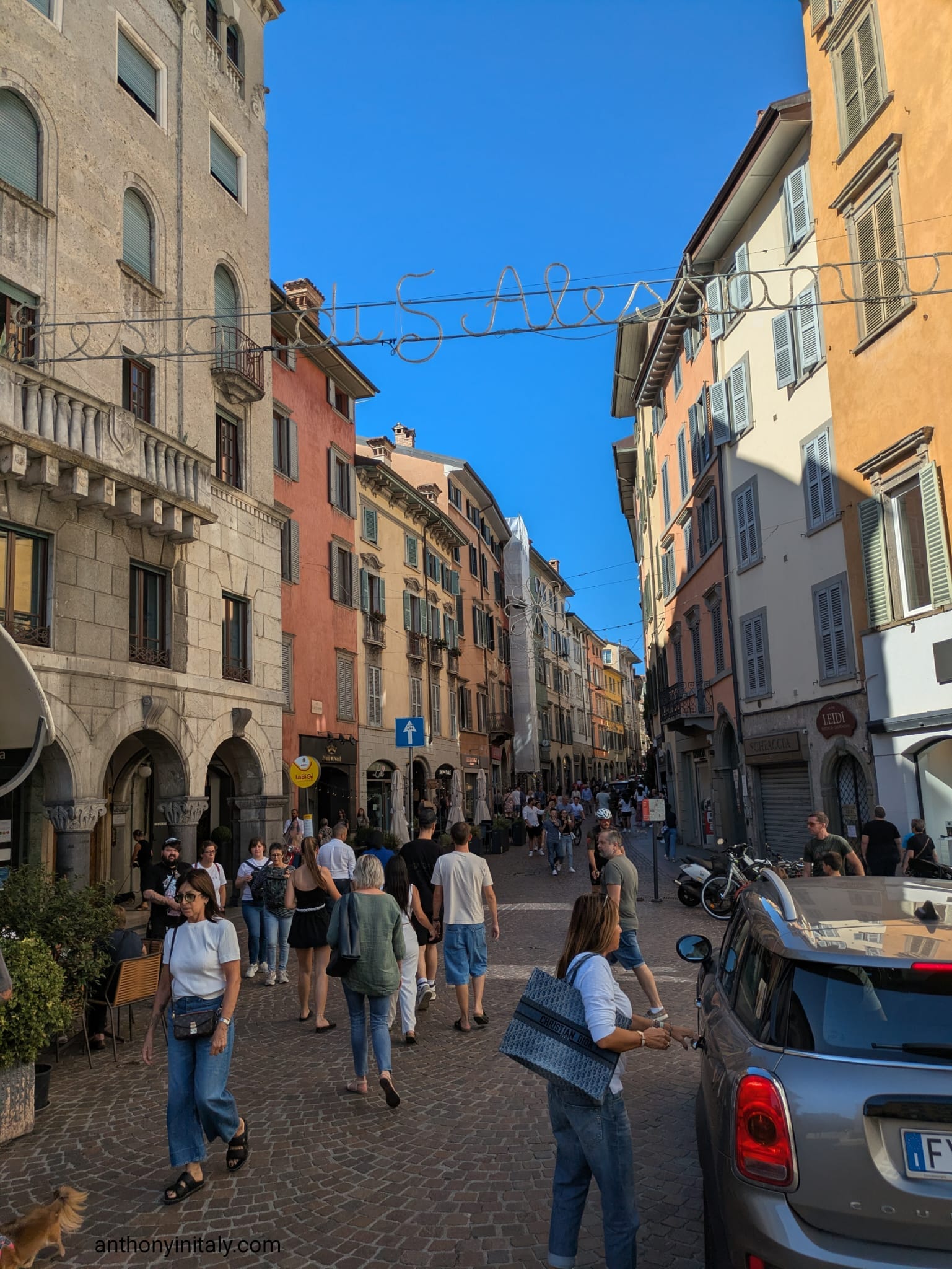
Here’s the street corner I mean when I say Bergamo has good wandering even outside the main sights: the intersection of Via Sant’Alessandro, Largo Niccolò Rezzara, and Via XX Settembre, basically Piazza Pontida. It’s a colorful, lived-in stretch of the lower town.
Where to Eat
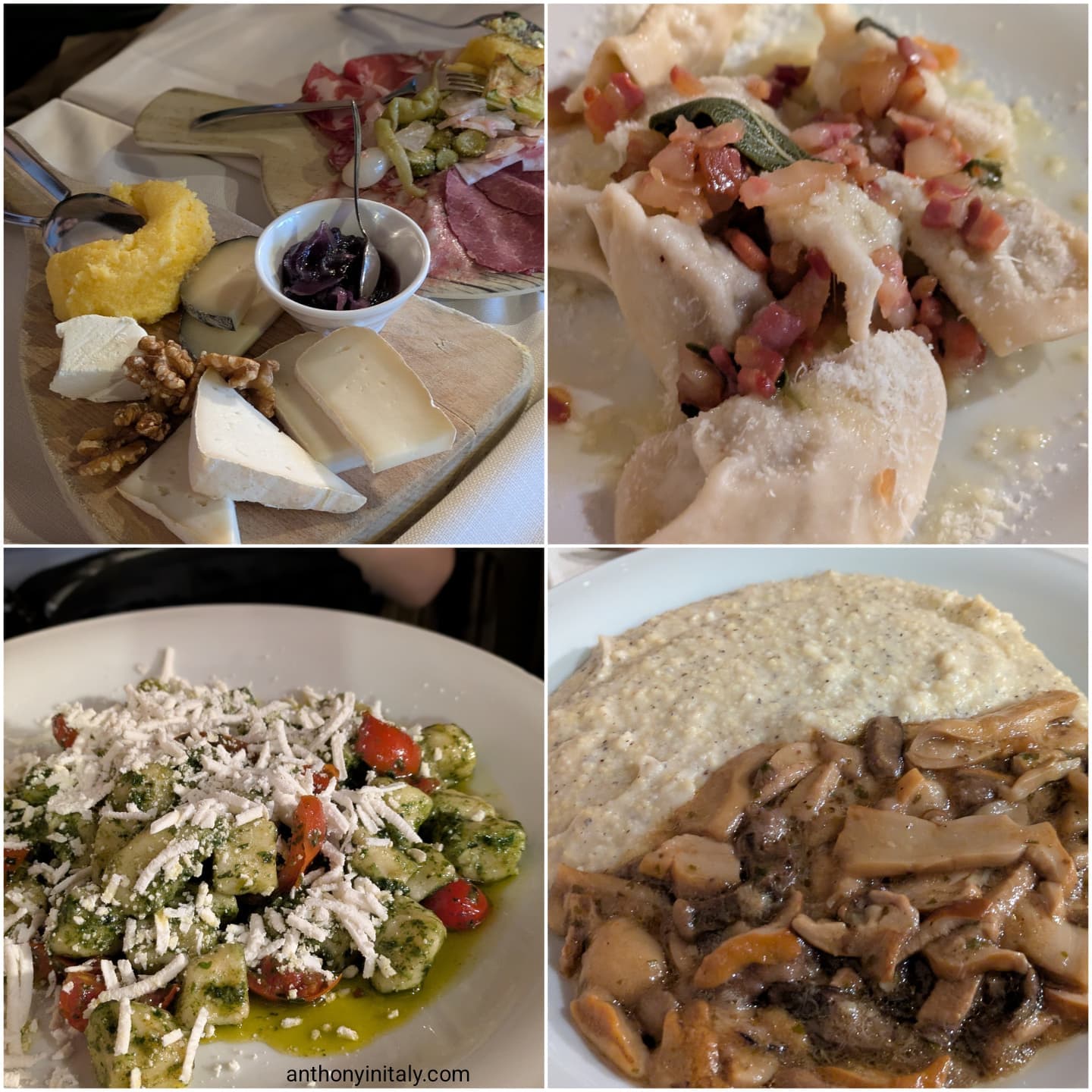
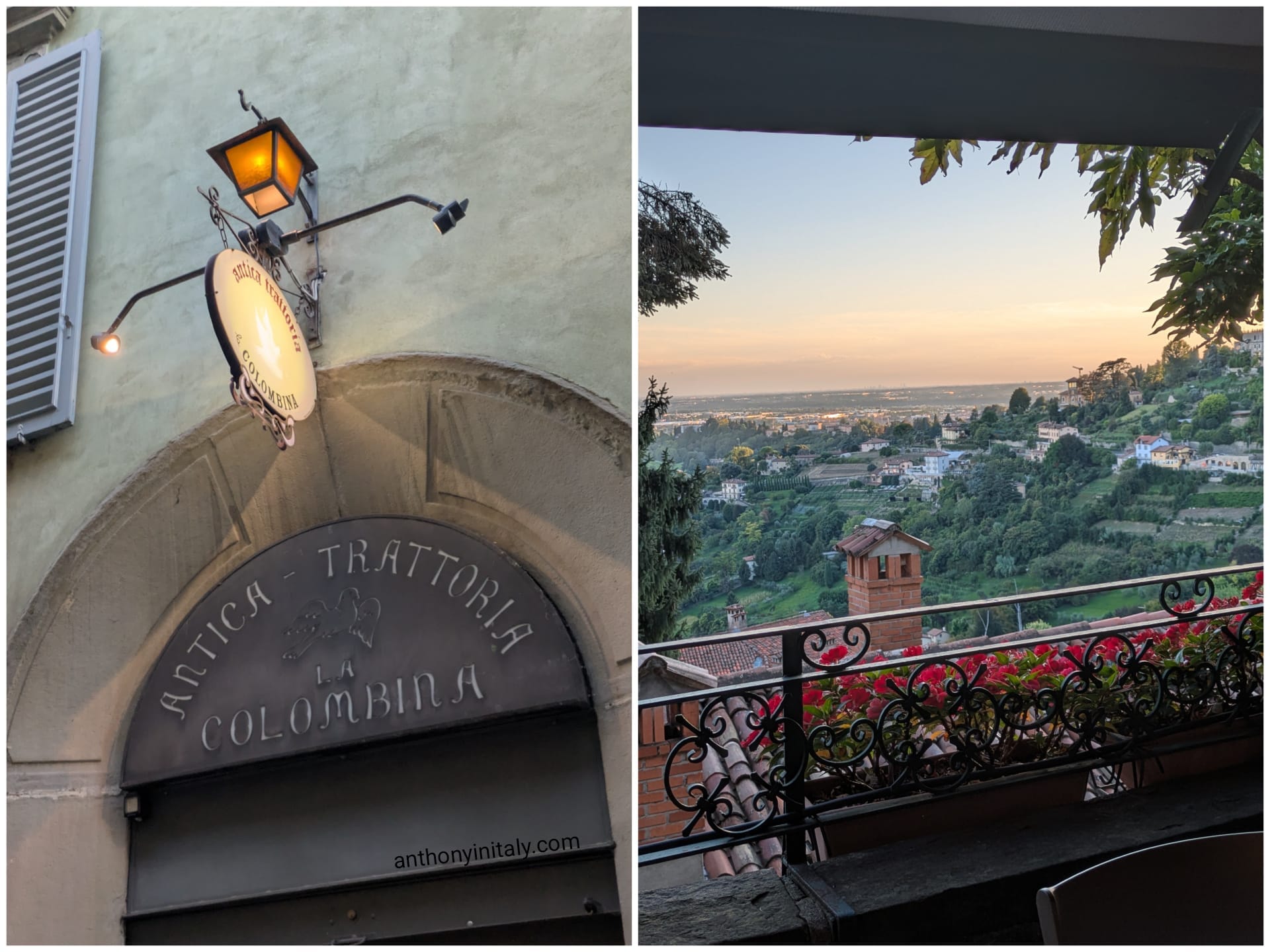
Antica Trattoria La Colombina. This was the meal of the trip. We got an antipasti board with local salumi, a selection of regional cheeses, walnuts, and a red onion mostarda, plus a side of soft polenta. Then casoncelli alla bergamasca, the local stuffed pasta typically served with butter, sage, and pancetta, gnocchi con pesto di spinacino, and polenta taragna con funghi, buckwheat polenta with sautéed mushrooms. We had it with a glass of Valcalepio, the local red. This is the meal that sold me on Bergamo’s food scene. If you only eat one proper sit-down dinner in the city, make it here.
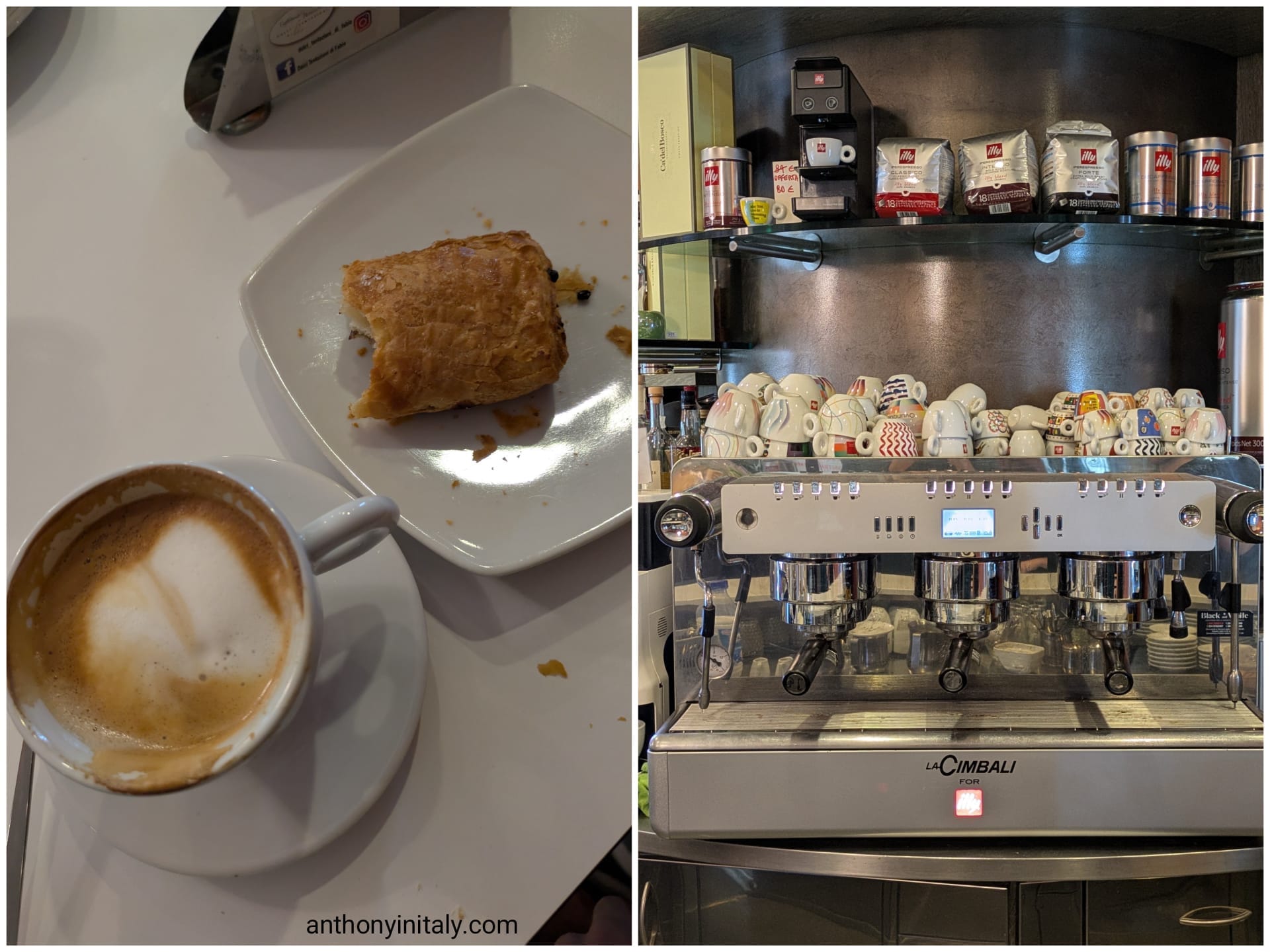
Pasticceria Fabio. Solid stop for a pastry and coffee before you head up into Città Alta. Nothing fancy, just a good local pasticceria doing what it does well.
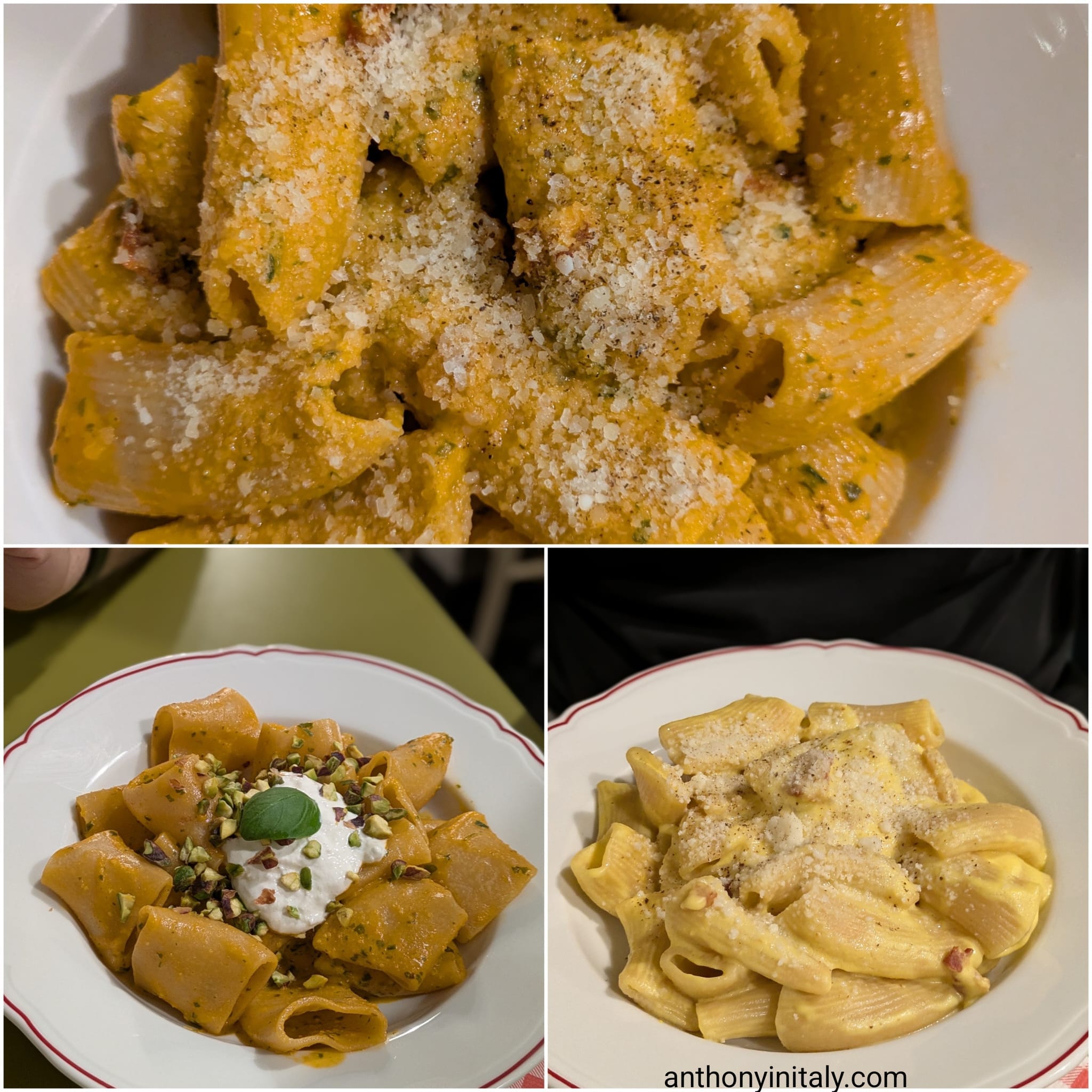
Miscusi. Good food, but don’t go in expecting some warm nonna-and-nonno osteria experience, because that’s not what this is. It’s modern, almost too modern. You order off an app on your phone, and you barely see staff until they’re bringing your food out. No chit-chat, no old guy checking on your table, none of that. It works, and the pasta is legitimately good, fresh, well made. I had what might’ve been a custom order, and the table also had a tricolore sbagliato and a carbonara. But if you’re craving that traditional sit-down Italian feel, this isn’t where you’ll find it. Think of it as a solid, efficient lunch stop, not a dining experience.
Gelato. We didn’t make it to a gelateria that stood out on this trip, but the most locally recommended spots in Bergamo are VerdeRosa and Gemma. Worth knowing since Bergamo has a real gelato scene and skipping it because you didn’t know where to go would be a mistake.
Restaurants I Didn’t Get To
I didn’t eat at these on this trip, but they came up repeatedly from locals and other travelers, so I’m including them with that context clearly stated.
Ristorante La Tana. Described as a characteristic restaurant up in Bergamo Alta. On the list for next time.
Trattoria Parietti. Known for typical Bergamasque cooking at a genuinely good value, the kind of place locals actually go rather than a tourist trap dressed up as one.
Osteria La Malga. Comes recommended specifically for its fixed menu. If you want a no-decisions, just-eat-well kind of meal, this is apparently the move.
Where to Stay
Bergamo doesn’t have a huge range of hotel inventory compared to Milan or Rome, but what’s there covers different needs well. Here’s how I’d break it down based on what each property actually offers rather than forcing them into artificial budget tiers that don’t hold up once you look at actual pricing.
Most atmospheric: Palazzo Santo Spirito
A historic property with real character if you want your stay itself to feel like part of the Bergamo experience, not just a place to sleep.
Book Palazzo Santo Spirito
Best for staying inside Città Alta: Hotel Piazza Vecchia
If you want to wake up inside the walled upper town and skip the funicular commute entirely, this is your play. Location is the whole pitch here.
Book Hotel Piazza Vecchia
Best located: Petronilla
Central and convenient for getting around to both the lower town sights and up into Città Alta without wasting time in transit.
Book Petronilla
Best for train access and wellness: Arli Hotel Business and Wellness
Good option if you’re coming in by train and want amenities beyond just a bed, has wellness facilities on site.
Book Arli Hotel Business and Wellness
Best boutique, highest-rated: Hotel Excelsior San Marco
The strongest reviews of the group and a more boutique feel if that matters more to you than being inside the walls.
Book Hotel Excelsior San Marco
How to Get to Bergamo
The nearest airport is Milan Bergamo Airport, and don’t let the name fool you, it’s actually located in Bergamo, not Milan. From the airport into the city, take bus line 1 (about 20 minutes). You can buy tickets on board with tap-to-pay, no need to sort out a ticket machine or app beforehand.
If you’re coming from Milan, take the Trenord line from Milano Centrale to Bergamo. It runs about 48 minutes without changes.
Once you’re in the city, you won’t need a car. Bergamo is mostly flat in the lower part, with some inclines both in the lower city and up in Città Alta. It’s clean and genuinely walkable, and the funicular handles the one part of town that would otherwise be a slog.
Key Takeaways
Bergamo is worth more than a layover, give it at least a full day and ideally two. Base yourself in or near Città Alta so you’re not commuting up and down constantly. Eat at Antica Trattoria La Colombina for the best sit-down meal you’ll find, and don’t skip VerdeRosa or Gemma for gelato even if you’re short on time.
Final Thoughts
Bergamo surprised me. I went for a friend, not because it was on some must-see Italy list, and left thinking it deserves a lot more attention than it gets. It has the charm people fly to Italy hoping to find, without the crowds that come with it in more famous cities.
What I’ve Learned
Living in Italy, the cities that stick with me aren’t always the ones everyone’s heard of. Bergamo has real history, a genuinely walkable old town, and food that doesn’t need to perform for tourists because the locals are still the primary customer. That’s usually the sign a place is worth your time.
Related Content
If Bergamo has you thinking about the rest of Northern Italy, check out my Milan Travel Guide: Where to Stay, Eat, and What to See and Venice Recommendations that Don’t Suck.
FAQ
Is Bergamo worth visiting if I’m only flying through the airport?
Yes. It’s a common mistake to treat Bergamo as just an airport. The upper town alone justifies stepping outside the terminal for a day.
How do I get from Milan Bergamo Airport into the city?
Take bus line 1, tickets available on board via tap-to-pay.
How long does it take to get to Bergamo from Milan by train?
About 48 minutes on the Trenord line direct from Milano Centrale, no changes needed.
Do I need a car in Bergamo?
No. The city is walkable, mostly flat, and the funicular covers the incline between the lower and upper towns.
What’s the one meal I shouldn’t skip in Bergamo?
Dinner at Antica Trattoria La Colombina. Casoncelli alla bergamasca and polenta taragna con funghi with a glass of Valcalepio.
Where’s the best gelato in Bergamo?
VerdeRosa and Gemma are the most consistently recommended by locals.